Koxinga
Koxinga - Lord with the Imperial Surname is the traditional Western spelling[2] of Zheng Chenggong (1624 - 1662). Koxinga was a leader at the end of the…
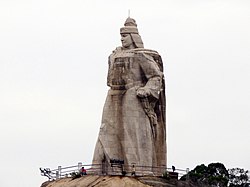
Zheng Chenggong 鄭成功 | |
|---|---|
 His statue on Gulangyu Island, Xiamen | |
| Born | August 1624 |
| Died | June 23, 1662 (aged 37) |
| Occupation | Military leader |
| Title | Guoxingye |
| Successor | Zheng Jing |
| Spouse | Dong[1] |
| Children | Zheng Jing, Zheng Xi |
| Parent(s) | Zheng Zhilong (Father), Tagawa (Mother) |
Koxinga - Lord with the Imperial Surname is the traditional Western spelling[2] of Zheng Chenggong (1624 - 1662). Koxinga was a leader at the end of the Chinese Ming Dynasty. He defeated the Dutch to claim Taiwan in 1662 at the Siege of Fort Zeelandia.
Related pages
References

Wikimedia Commons has media related to Koxinga.
- ↑ Willis, John E. (1974). Pepper, Guns and Parleys: The Dutch East India Company and China 1622-1681, p. 28.
- ↑ "Koxinga's Shrine". Archived from the original on 2009-03-18. Retrieved 2009-09-08.

Content Disclaimer
Informasi ini disarikan dari Wikipedia dan disajikan kembali untuk tujuan edukasi. Konten tersedia di bawah lisensi CC BY-SA 3.0. Kami tidak bertanggung jawab atas ketidakakuratan data yang bersumber dari kontribusi publik tersebut.
- The information displayed on this website is sourced in part or in whole from Wikipedia and has been adapted for the purpose of restating it. We strive to provide accurate and relevant information, however:
- There is no guarantee of absolute accuracy. Wikipedia is an open, collaborative project that can be edited by anyone, so information is subject to change.
- It is not intended to constitute professional advice. The content displayed is for informational and educational purposes only. For important decisions (e.g., medical, legal, or financial), please consult a professional.
- Content copyright. Wikipedia is licensed under the Creative Commons Attribution-ShareAlike License (CC BY-SA). This means that content may be reused with appropriate attribution and shared under a similar license.
- Responsible use. Any risk arising from the use of information from this website is entirely the responsibility of the user.