Kamaboko
Kamaboko (蒲鉾), also known as surimi' is a cured, processed seafood product of Japan. It is made of puréed white fish, formed into different shapes includin…
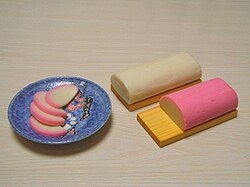


Kamaboko (蒲鉾), also known as surimi' is a cured, processed seafood product of Japan. It is made of puréed white fish, formed into different shapes including semi-cylinder loafs, and steamed until it becomes firm. Some kamaboko known as narutomaki is made with a swirl pattern in the center of each slice, named after the famous tidal whirlpool in the Japanese city Naruto. Outside of Japan, kamaboko is often referred to as fish cake.
Kamaboko has been made in Japan since the 14th century CE and has become commonly available in many other countries. One example that can be found in the West is kanikama (also known as kani kamaboko), or imitation crab. This variation of surimi is quite common in the West as it is a cheap substitute for real crab meat.
In Japan, kamaboko can often be seen served as a topping over ramen or udon. It is also commonly sold at convenience stores as chikama (kamaboko and cheese).


Content Disclaimer
Informasi ini disarikan dari Wikipedia dan disajikan kembali untuk tujuan edukasi. Konten tersedia di bawah lisensi CC BY-SA 3.0. Kami tidak bertanggung jawab atas ketidakakuratan data yang bersumber dari kontribusi publik tersebut.
- The information displayed on this website is sourced in part or in whole from Wikipedia and has been adapted for the purpose of restating it. We strive to provide accurate and relevant information, however:
- There is no guarantee of absolute accuracy. Wikipedia is an open, collaborative project that can be edited by anyone, so information is subject to change.
- It is not intended to constitute professional advice. The content displayed is for informational and educational purposes only. For important decisions (e.g., medical, legal, or financial), please consult a professional.
- Content copyright. Wikipedia is licensed under the Creative Commons Attribution-ShareAlike License (CC BY-SA). This means that content may be reused with appropriate attribution and shared under a similar license.
- Responsible use. Any risk arising from the use of information from this website is entirely the responsibility of the user.